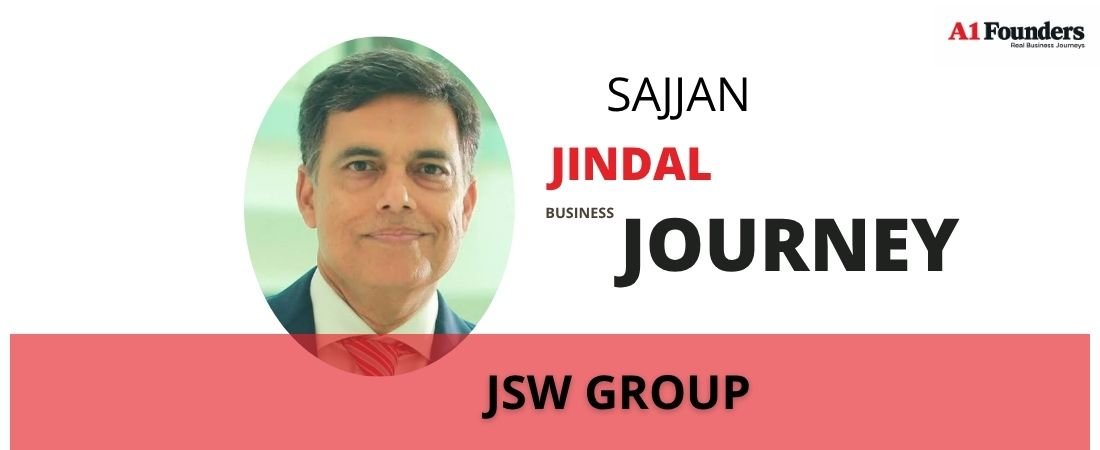
Sajjan Jindal is one of India’s well-known industrialists. He is the chairman and managing director of JSW Group. The group has businesses in steel, energy, infrastructure, cement, paints and other areas.
JSW is now a large business group, but its growth took many years. Sajjan Jindal played a major role in building the group’s steel business and expanding it into other industries.
Early Life
Sajjan Jindal was born on December 5, 1959, in Mumbai, Maharashtra.
He comes from the Jindal family. His father, O. P. Jindal, started the Jindal Group and built a successful business in steel and other industries.
Sajjan Jindal studied mechanical engineering at the Bangalore University.
After completing his education, he joined the family business. He started learning about manufacturing, steel and industrial operations.
Starting His Own Journey
The Jindal Group had several businesses, and the family later divided responsibilities among the brothers.
Sajjan Jindal took responsibility for the western and southern parts of the group’s business.
He focused strongly on the steel industry.
At that time, the steel business required large investments. It also needed good infrastructure, raw materials, power and transportation.
Sajjan Jindal decided to build and expand steel operations instead of staying with a small business.
Building JSW Steel
One of the biggest steps in his journey came with the development of the steel business at Vijayanagar in Karnataka.
The plant grew over the years and became one of the main parts of JSW’s business.
The company invested in modern technology and increased its production capacity.
The growth of the Vijayanagar steel plant helped JSW become a major steel producer in India.
JSW Steel later expanded its operations through acquisitions and new projects.
Expansion Into Other Industries
Sajjan Jindal did not keep JSW limited to steel.
The group entered several other industries.
JSW Energy became an important part of the group. The company developed power projects and worked in both conventional and renewable energy.
JSW also expanded into infrastructure and cement.
The group later entered the paints business as well.
These businesses helped JSW become a diversified group instead of depending only on steel.
The Importance of Infrastructure
Infrastructure has always been closely connected with JSW’s business.
Steel plants need roads, ports, railways, power and other facilities to operate smoothly.
JSW invested in infrastructure projects and port facilities to support its industrial businesses.
The group has also been involved in projects related to roads, water and urban infrastructure.
This helped connect different parts of the group’s business.
Growth Through Acquisitions
Another important part of Sajjan Jindal’s business journey has been acquisitions.
JSW has bought or invested in companies and assets in different industries.
These deals helped the group enter new markets and increase its business size.
However, acquisitions also bring challenges. A company has to manage debt, integrate operations and improve the performance of the businesses it buys.
JSW has used acquisitions as one of the ways to expand its presence.
Entry Into Cement and Paints
JSW later expanded further into building materials.
JSW Cement became part of the group’s growing construction-related business.
The group also entered the paints market with JSW Paints.
These businesses are connected in some ways to the construction and real estate markets.
The expansion gave JSW more areas to grow beyond its traditional steel and energy businesses.
Focus on Green Energy
Energy and environmental issues have become more important for large industrial companies.
JSW has increased its focus on renewable energy.
The group has invested in solar and wind power projects and has also been working on other cleaner energy solutions.
JSW Steel has also been working on ways to reduce emissions from steel production.
Steel is an energy-intensive industry, so reducing emissions is a major challenge for companies in this sector.
Challenges in the Steel Business
The steel industry is not an easy business.
Steel prices can change quickly. Demand also depends on construction, automobiles, infrastructure and other industries.
The company also has to manage the cost of raw materials, energy and transportation.
Global competition and changes in trade rules can also affect steel companies.
JSW has had to deal with these changes while continuing to invest in new projects and technology.
Sajjan Jindal’s Business Approach
Sajjan Jindal has spent most of his career in large industrial businesses.
His approach has focused on building scale and investing for the long term.
He has also looked for opportunities to expand into related industries.
The growth of JSW shows this approach clearly. The group started with a strong focus on steel and later built businesses in energy, infrastructure, cement and paints.
JSW Group Today
JSW Group is now one of India’s major business groups.
Its businesses cover steel, energy, infrastructure, cement, paints and other areas.
JSW Steel remains one of the group’s most important companies.
The group has operations in India as well as other countries through some of its businesses.
Sajjan Jindal continues to lead the group and remains closely involved in its major business decisions.
Conclusion
Sajjan Jindal’s business journey is closely connected with the growth of JSW.
He joined the family business and later took responsibility for building the group’s presence in western and southern India.
His main focus became steel, and the development of the Vijayanagar plant played an important role in JSW’s growth.
Over the years, he expanded the group into energy, infrastructure, cement and paints.
From a strong base in steel, JSW has grown into a diversified business group. Sajjan Jindal’s journey shows how long-term investment, expansion and adapting to new markets can shape a large industrial business.