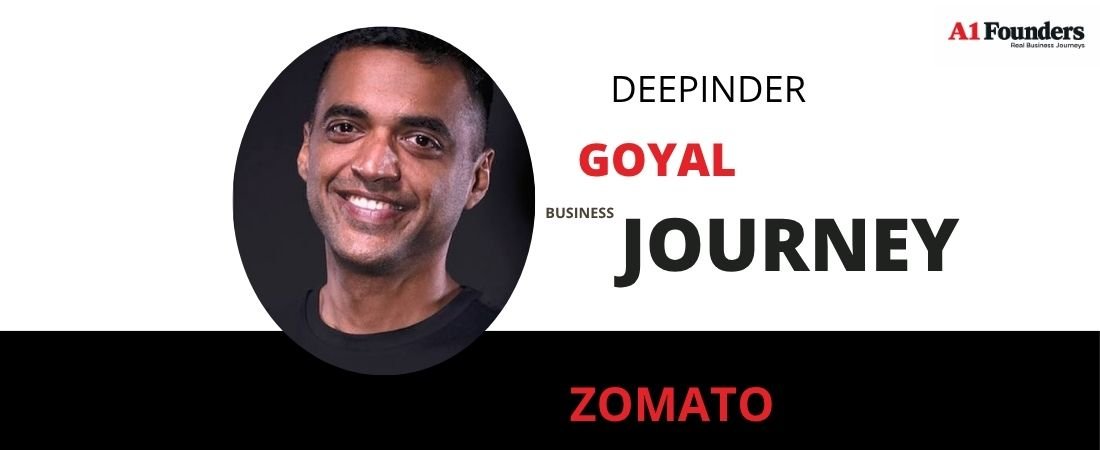
Deepinder Goyal is the founder of Zomato, one of India’s best-known food technology companies. He started the company with a simple idea. He wanted to make it easier for people to find restaurants and decide where to eat.
What started as a small website inside an office later became a large food and technology business.
Zomato first helped people find restaurant information and menus. Over time, it added online food ordering, delivery and other services.
Deepinder’s journey is a good example of how a simple problem can lead to a much bigger business.
Early Life and Education
Deepinder Goyal was born in Muktsar, Punjab.
He studied at the Indian Institute of Technology Delhi. He completed his degree in Mathematics and Computing.
After completing his studies, he started working at Bain & Company.
His job gave him experience of working with businesses and solving different problems.
But his own experience at the workplace later helped him come up with the idea that became Zomato.
The Idea Behind Zomato
While working at Bain & Company, Deepinder noticed that employees often had difficulty finding restaurant menus.
People would spend time looking through printed menus or asking others about restaurants.
Deepinder and his colleague Pankaj Chaddah decided to create a simple digital solution.
They scanned restaurant menus and made them available online for employees.
The project was first called Foodiebay.
It was a small idea, but people started using it.
The founders realised that the same problem existed outside their office.
Many people wanted an easy way to find restaurants, menus and other information.
Starting Foodiebay
Foodiebay started in 2008.
At first, it mainly provided restaurant menus and information.
The website helped users search for restaurants and see their menus.
The service started gaining attention.
The founders decided to leave their jobs and work on the business full-time.
This was a major decision.
They had to leave a stable career and take the risk of building a new company.
Foodiebay Becomes Zomato
In 2010, Foodiebay was renamed Zomato.
The new name helped the company build its own identity.
Zomato expanded its restaurant listings and entered more Indian cities.
It also started adding restaurant reviews, ratings and other information.
The platform became useful not only for finding menus but also for choosing restaurants.
This helped increase the number of users.
Expanding Across India
Zomato gradually expanded to more cities.
The company added thousands of restaurants to its platform.
It also improved its mobile app and website.
Customers could search for restaurants based on location, type of food and other factors.
Restaurant owners also started using Zomato to reach more customers.
This created a business model where both customers and restaurants could benefit from the platform.
Entering International Markets
Zomato did not stop with India.
The company started expanding into other countries.
It entered markets such as the United Arab Emirates, Sri Lanka, South Africa and several other countries.
The goal was to build a global restaurant discovery platform.
International expansion helped Zomato become known outside India.
However, running a business in different countries was not always easy.
Each market had different customers, competitors and business conditions.
Zomato later reduced its presence in several international markets and focused more strongly on India.
Starting Food Delivery
Restaurant discovery was the first part of Zomato’s business.
The company later entered online food ordering and delivery.
Customers could order food from restaurants through the Zomato app.
This changed the company significantly.
Zomato was no longer only a restaurant information platform. It became part of the food delivery business.
The company built a delivery network and worked with restaurants and delivery partners.
Competition in Food Delivery
The food delivery market became highly competitive.
Zomato faced strong competition from Swiggy and other local platforms.
Both companies spent money on technology, delivery networks and customer offers.
Zomato had to work on delivery speed, restaurant partnerships and customer service.
The company also had to find ways to make food delivery financially sustainable.
This became one of the biggest challenges in its journey.
Acquiring Uber Eats India
In 2020, Zomato acquired Uber Eats’ India business.
The deal helped Zomato increase its presence in the Indian food delivery market.
Uber Eats customers and restaurants were moved to the Zomato platform.
The acquisition also strengthened Zomato’s position against Swiggy.
It was an important step in the company’s growth.
Zomato Goes Public
One of the biggest moments in Zomato’s journey came in 2021.
Zomato launched its initial public offering, or IPO, in July 2021.
The company was listed on the Indian stock exchanges.
Zomato became one of the first major Indian internet startups to enter the public market.
The IPO received a lot of attention from investors and the public.
The listing gave Zomato access to public capital and brought the company under greater public scrutiny.
Zomato and Blinkit
Zomato later expanded beyond restaurant food delivery.
The company had already invested in Blinkit, which was earlier known as Grofers.
In 2022, Zomato acquired the remaining shares needed to take control of Blinkit.
Blinkit operates in quick commerce and delivers groceries and other products to customers.
This was a major change for Zomato.
The company was moving from food delivery into a much wider delivery business.
From Zomato to Eternal
In 2025, Zomato’s parent company changed its name to Eternal.
Zomato remained the name of the food delivery business.
The larger Eternal group includes businesses such as Zomato, Blinkit, District and Hyperpure.
This change reflected how much the company had grown beyond its original restaurant discovery platform.
Deepinder Goyal continued to play an important role in the group.
Deepinder Goyal’s Leadership
Deepinder Goyal has been closely involved with Zomato since the beginning.
He started the company with Pankaj Chaddah and helped build it over many years.
His focus has often been on technology and solving everyday problems.
Zomato started with restaurant menus because people needed easier access to information.
It later moved into food delivery because customers wanted an easier way to order food.
The company then moved into quick commerce and other services.
These changes show how the business has developed over time.
Challenges Faced by Zomato
Zomato has faced many challenges.
Food delivery requires a large delivery network and involves high operating costs.
The company also had to compete with Swiggy for customers and restaurants.
International expansion created additional costs and difficulties.
There were also concerns about profitability and the cost of customer discounts.
The COVID-19 pandemic created another major challenge for the restaurant industry.
Restaurants were closed or operated with restrictions for long periods.
Zomato had to adjust its business during this period.
The company also had to manage the needs of restaurants, customers and delivery partners.
Focus on New Businesses
Zomato has gradually built a group of businesses around food, delivery and local services.
Blinkit became an important part of the group.
Hyperpure supplies food ingredients and other products to restaurants.
District focuses on going-out experiences such as dining, movies and events.
These businesses allow the group to serve customers in different parts of their daily lives.
Deepinder Goyal’s Business Journey
Deepinder Goyal started with a small problem at his workplace.
He noticed that finding restaurant menus was not easy.
Instead of keeping the idea inside the office, he and Pankaj Chaddah turned it into a business.
The company grew from a simple restaurant information website into a food delivery platform.
It later expanded into quick commerce and other areas.
The journey also included difficult periods, competition and changes in business strategy.
Zomato Today
Zomato is now part of the larger Eternal group.
The Zomato platform continues to focus on restaurant discovery and food delivery.
Blinkit is a major quick-commerce business within the group.
The group also operates businesses such as Hyperpure and District.
This is very different from the small website that started with restaurant menus in 2008.
Conclusion
Deepinder Goyal started Zomato with Pankaj Chaddah after noticing a simple problem at work.
They created a website where people could find restaurant menus and information.
The business grew slowly at first and later expanded across India and other countries.
Zomato then entered food delivery and became one of India’s major food delivery companies.
The company acquired Uber Eats India in 2020 and went public in 2021.
Later, its investment in Blinkit helped it enter quick commerce.
In 2025, the parent company became Eternal, with Zomato continuing as one of its main businesses.
Deepinder Goyal’s journey shows how a small idea can change over time. What started as a way to find restaurant menus eventually became a much larger technology and delivery business