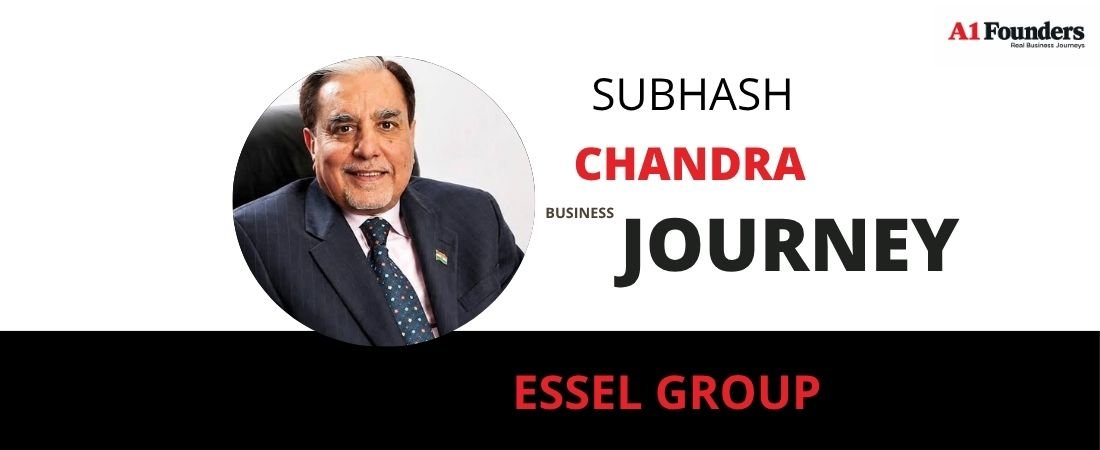
Subhash Chandra is a well-known Indian businessman and the founder of the Essel Group. His business journey covers several industries, including media, entertainment, packaging, infrastructure, and financial services.
He did not start with a large company or a big business empire. His family was involved in a small trading business. Over the years, Subhash Chandra entered new businesses and built companies in different sectors.
One of the biggest turning points in his career came when he entered the television business. The launch of Zee TV helped him build one of India’s major private television networks.
His journey also includes periods of rapid growth, major investments, business problems, and financial pressure. Understanding these different stages gives a clear picture of how his business developed over the years.
Early Life of Subhash Chandra
Subhash Chandra was born on November 30, 1950, in Adampur, Haryana.
He came from a family that was involved in business. His family dealt in food grains and commodities.
Subhash Chandra did not complete college. Instead, he joined the family business at a young age.
Working in the family business gave him early experience in buying, selling, and dealing with customers.
But he wanted to build something of his own.
He started looking for new business opportunities and slowly moved away from the traditional family business.
Starting His Business Journey
In the early part of his career, Subhash Chandra entered the packaging business.
He saw an opportunity in the manufacturing of packaging materials. This business later became an important part of the Essel Group.
The company started producing packaging products used by different industries.
This helped him understand manufacturing and large-scale business operations.
However, media was the sector that later changed his business journey in a major way.
Entering the Media Business
In the early 1990s, India’s television industry was changing.
For many years, television in India was dominated by Doordarshan. The arrival of satellite television created new opportunities for private companies.
Subhash Chandra saw this opportunity.
In 1992, Zee TV was launched. It became one of India’s first Hindi satellite television channels.
The channel quickly became popular among Indian viewers.
This was a major turning point for Subhash Chandra.
He was no longer known only for manufacturing and packaging. His group was now becoming a major name in Indian media.
Growth of Zee
After Zee TV, the group expanded its television business.
More channels were launched for different types of viewers.
The Zee network entered areas such as Hindi entertainment, regional language programming, movies, music, news, and other content.
Television advertising became an important source of revenue.
The growth of cable television across India also helped private television channels reach more homes.
Zee became one of the major television networks in the country.
Expansion Into Entertainment
Subhash Chandra’s media business did not remain limited to television channels.
The group also entered film production, music, broadcasting, and other entertainment businesses.
Zee Cinema became an important movie channel.
Zee Music and other channels added more variety to the network.
The group also became involved in film distribution and other parts of the entertainment industry.
This helped create a larger media business instead of depending on only one television channel.
Essel Group and Infrastructure
The Essel Group also entered infrastructure-related businesses.
One of the major projects was EsselWorld in Mumbai.
It became one of India’s well-known amusement parks and entertainment destinations.
The group also became involved in areas such as infrastructure development, roads, and other projects.
This was part of Subhash Chandra’s wider strategy of building businesses in different sectors.
Dish TV
Another major development came with Dish TV.
The company entered the direct-to-home television business.
Dish TV allowed customers to receive television channels directly through a satellite dish.
This was an important development at a time when Indian television was moving from traditional cable systems toward digital services.
Dish TV became one of the major DTH operators in India.
The business also faced strong competition from companies such as Tata Play, Airtel Digital TV, and others.
Zee Entertainment
Zee Entertainment Enterprises became the main listed media company associated with the group.
The company operated television channels and digital entertainment businesses.
Over the years, the media industry changed significantly.
Viewers started moving from traditional television to online platforms.
Streaming services such as Netflix, Amazon Prime Video, Disney+ Hotstar, and other digital platforms changed how people watched entertainment.
Zee also invested in digital content and online platforms to respond to these changes.
Challenges in Business
Subhash Chandra’s business journey has also faced several difficult periods.
The Essel Group expanded quickly and made investments across many industries.
Large businesses require large amounts of money. Debt became an important issue for some companies in the group.
In the late 2010s, several Essel Group companies faced financial pressure.
The group had to sell assets and restructure parts of its business to reduce debt.
Subhash Chandra also faced criticism and questions from investors and the media regarding the group’s financial position.
These problems affected several businesses connected with the group.
Zee and Sony Merger Dispute
Zee Entertainment’s proposed merger with Sony’s India business became another major event.
In 2021, Zee and Sony announced plans to merge their Indian television and digital businesses.
The deal later faced disagreements and legal disputes between the two companies.
In January 2024, Sony Group announced that it was terminating the proposed merger.
Zee disputed some of Sony’s claims and the two sides had legal proceedings related to the matter.
The proposed merger ultimately did not go ahead.
This period showed the difficulties involved in large corporate deals.
Changing Media Industry
The media business has changed a lot since Subhash Chandra launched Zee TV.
Earlier, television channels depended heavily on cable networks and advertising.
Today, people watch content on mobile phones, smart TVs, websites, and streaming platforms.
This has created both opportunities and challenges for traditional media companies.
Zee has had to compete with global streaming companies as well as other Indian entertainment businesses.
The company has continued to invest in television and digital content.
Subhash Chandra’s Business Style
Subhash Chandra has often looked for new industries where he saw room for growth.
He moved from trading and packaging into television, entertainment, DTH, infrastructure, and other businesses.
His decision to enter satellite television in the early 1990s was especially important.
At that time, private television was still a new market in India.
The success of Zee showed that there was a large audience for private Indian entertainment channels.
His business journey also shows the risks involved in rapid expansion.
When a business grows across many sectors, it needs large amounts of capital and strong financial management.
Social Work
Subhash Chandra has also been involved in social and educational initiatives.
The Essel Group and its associated organisations have supported activities related to education, healthcare, social development, and other areas.
Subhash Chandra has also spoken publicly about education and entrepreneurship.
His work outside business has included initiatives aimed at supporting young people and community development.
Where the Business Stands Today
The Essel Group has changed significantly over the years.
Some businesses have been sold, restructured, or separated from the wider group.
Zee Entertainment remains one of the major companies associated with Subhash Chandra’s business journey.
The company continues to operate television channels and digital entertainment services.
The media industry is now much more competitive than it was in the 1990s.
Traditional television companies have to compete with streaming services, social media, online video, and changing viewer habits.
Conclusion
Subhash Chandra’s business journey started with a family trading business and later moved into manufacturing, television, entertainment, DTH, infrastructure, and other sectors.
The launch of Zee TV in 1992 was one of the most important moments in his career. It helped create a new private television network in India.
Over the years, the Essel Group grew into a large business group with interests in several industries.
The journey also included major challenges. Debt, financial pressure, competition, changing technology, and business restructuring affected different parts of the group.
Today, Subhash Chandra’s name remains closely connected with the growth of private television and the Indian media industry. His journey reflects both the opportunities and challenges that come with building a large business across different sectors.